A useful RNA sequence still needs a route into the cell
Messenger RNA carries information that a cell's translation machinery can use to make a protein. Designing a suitable sequence is only one part of using that capability. The RNA must survive preparation and delivery, reach an appropriate cell and become available in the cytoplasm. Its size, charge and susceptibility to degradation make those requirements difficult to satisfy with unprotected RNA alone.
Lipid nanoparticles are formulated delivery systems that help address several of these barriers. They are not simply tiny versions of a conventional pill. Their components assemble into structures whose properties influence the cargo's protection, interactions and intracellular fate. Hou and colleagues' review describes the design problem as a sequence of molecular and physiological challenges rather than a single packaging step. [1]
Several lipid components share the job
A typical mRNA lipid-nanoparticle formulation combines an ionizable lipid with supporting components such as a phospholipid, cholesterol and a lipid attached to polyethylene glycol, or PEG. Each can influence how the particles form, remain dispersed and interact with their surroundings. The balance between components matters, so a formulation cannot be understood by listing only one headline ingredient. [1]
The components also affect one another. Changing a helper lipid may alter particle organization, while changing a PEG-associated component can affect surface accessibility and interactions. A formulation that protects RNA well before administration may still perform poorly after entering a cell. The useful design is a coordinated system whose behaviour is evaluated at the stages that matter for the intended application.
Ionizable lipids connect charge with the local environment
RNA's phosphate backbone carries negative charge under relevant conditions. Positively charged lipid groups can interact with that backbone during formulation. Ionizable lipids are designed so that their charge state changes with the environment, rather than remaining uniformly positive in every setting. Acidity is therefore part of the design logic.
The important value is not simply whether a molecule is called ionizable. Its chemical structure, the surrounding particle and local conditions influence its effective behaviour. A change in head group or hydrophobic region can alter more than one property at once. The formulation must support assembly and stability while also functioning after cellular uptake. Charge is a useful control variable, but maximizing charge everywhere is not a universal solution.
Particle formation is a process as well as a recipe
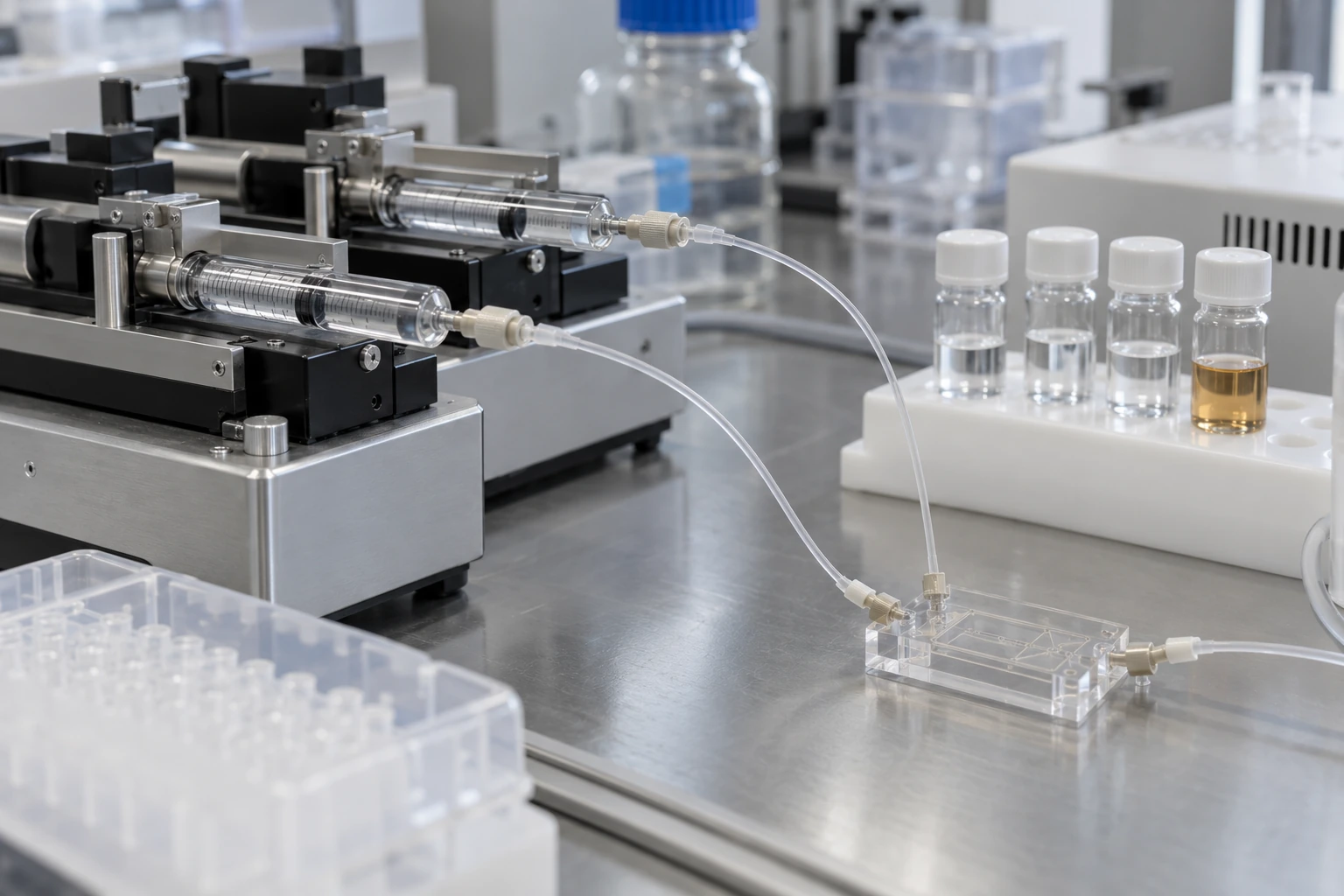
The same ingredient list does not guarantee the same particle population. Mixing conditions influence how rapidly components encounter one another and assemble. Concentration, relative stream flow and the subsequent removal or adjustment of processing components can affect the final material. This connects nanoparticle formulation with microfluidics and process engineering.
An invented comparison makes the point. Two batches have identical starting ingredient ratios, but one forms a wider distribution of particle sizes and contains more unencapsulated RNA. They should not be assumed equivalent because their recipes match. Characterization is needed to establish the actual output. The final formulation is the result of ingredients passing through a controlled process, rather than an abstract composition that exists independently of manufacturing conditions.
Cellular uptake does not complete delivery
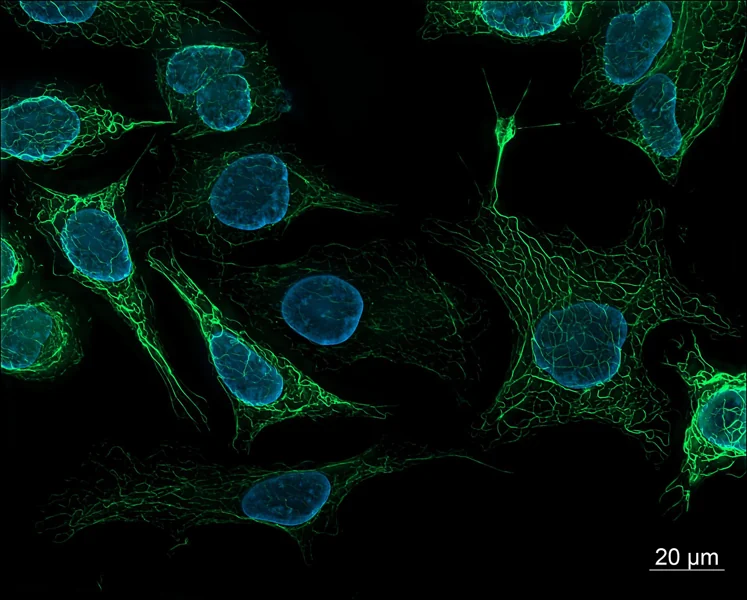
A cell can take up nanoparticle-associated material into a membrane-bound compartment called an endosome. The RNA then still needs access to the cytoplasm, where translation occurs. A bright image showing material inside cells can therefore be evidence of uptake without demonstrating useful RNA release.
Research imaging intracellular trafficking has directly investigated where and how delivered RNA escapes these compartments. Paramasivam and colleagues compared formulations and examined endosomal recycling structures in this context. [2] The broader lesson is that location matters. Material associated with the outside of a cell, trapped in an endosome and available to cytoplasmic machinery represents three different stages. An effective assay distinguishes the stage relevant to its claim instead of treating every intracellular signal as successful delivery.
Measurements should follow each barrier
A characterization programme might examine particle-size distribution, RNA integrity, the fraction associated with particles and the ability to produce the intended protein in a defined biological system. These measurements answer related but different questions. A particle can look consistent physically yet contain damaged cargo; a high association fraction does not prove that the RNA will become functionally available.
Consider an invented experiment in which two formulations enter cells equally well but produce different protein amounts. The difference could arise after uptake, from RNA integrity, intracellular trafficking or effects on cell condition. Additional measurements would be needed to distinguish those possibilities. Functional output is important, but understanding why it changed can make a formulation easier to improve and a result easier to reproduce.
The tissue and route influence what must be optimized
A delivery system encounters different barriers depending on where and how it is administered. Local administration and circulation through the bloodstream expose particles to different environments. The proteins and cells they encounter can change distribution and uptake. A formulation suited to one tissue should not automatically be expected to reach another with the same efficiency.
This makes application-specific evaluation essential. A useful result in a cultured cell line is an early piece of evidence, not a complete prediction of distribution in a person. The required amount and duration of protein expression also vary with the intended task. An experimental vaccine application, a temporary protein-replacement strategy and delivery of editing machinery can impose different constraints even when all involve RNA.
Manufacturing consistency and storage belong to the science
A promising delivery result must be reproduced with material that can be made, characterized and stored consistently. Scale-up can change mixing and transport even when the chemical recipe remains similar. Packaging and storage introduce further opportunities for the cargo or particle population to change before use.
The review by Hou and colleagues includes manufacturing and stability among the challenges for translation. [1] Their importance follows from the formulation itself: a delivery system is useful only if the material that reaches the experiment or clinic still has the properties that were tested. A successful research batch establishes a possibility. Consistent production and appropriate stability evidence establish whether that possibility can become a reliable product.
Why delivery chemistry has a wider impact
Lipid nanoparticles help connect an information-bearing molecule with the physical environment where that information can be used. That bridge brings chemistry into direct contact with cell biology, materials science and manufacturing. Improvements can expand which research questions or therapeutic strategies are feasible, while leaving effectiveness and safety to be demonstrated for each particular application.
For readers, the best question is where the new result improves the chain. Does it protect the RNA, change distribution, improve escape from an intracellular compartment or make production more consistent? Those achievements are valuable in different ways. Following the route from formulation to functional output explains both the promise of RNA delivery and why a small particle can contain a surprisingly large engineering problem.
A delivery system has to protect cargo, reach cells and release it where it can act.
Sources & further reading
Numbered references connect claims to their source. The main text is our original explanation; conceptual examples are identified as imagined.
- Hou et al. — Lipid nanoparticles for mRNA deliveryPeer-reviewed review · Nature Reviews Materials · 2021
- Paramasivam et al. — Endosomal escape of delivered mRNA visualized at the nanoscaleResearch paper · Journal of Cell Biology · 2022
Source review: 30 Oct 2026. Editorial standards.