Rust is an electrochemical process spread across a surface
Iron corrosion is not a single oxygen molecule grabbing an atom from one spot. At anodic regions, iron atoms enter the water as Fe²⁺ and leave electrons behind: Fe → Fe²⁺ + 2e⁻. Those electrons travel through the metal to cathodic regions, where dissolved oxygen accepts them in the presence of water. The resulting hydroxide and iron ions can form intermediate solids that are further oxidized into hydrated iron(III) oxides—the varied, water-containing materials commonly called rust. [1]
A thin water film therefore acts as part of an electrical circuit: metal carries electrons and the liquid carries ions. The anodic and cathodic regions may be close together on the same object. Their locations can shift as deposits, oxygen access and surface films change.
Salt changes how readily ions carry charge
Pure water contains very few mobile ions. Dissolving sodium chloride supplies Na⁺ and Cl⁻, increasing the solution’s ability to carry ionic current between reaction sites. That can make it easier for separated oxidation and reduction reactions to continue. OpenStax identifies electrolytes such as road salt and seawater as accelerants of iron corrosion when a protective coating is breached. [1]
Chloride also has a more localized role on metals that rely on a protective oxide film. NASA’s corrosion guidance describes chloride-associated pitting in passive metals: if the film breaks under a salt deposit, the exposed active metal can become a small anode coupled to a much larger surrounding cathode. This is especially relevant to stainless steel and other film-protected alloys; it should not be treated as a universal, identical mechanism for every iron surface. [2]
A worked comparison separates conductivity from corrosion rate
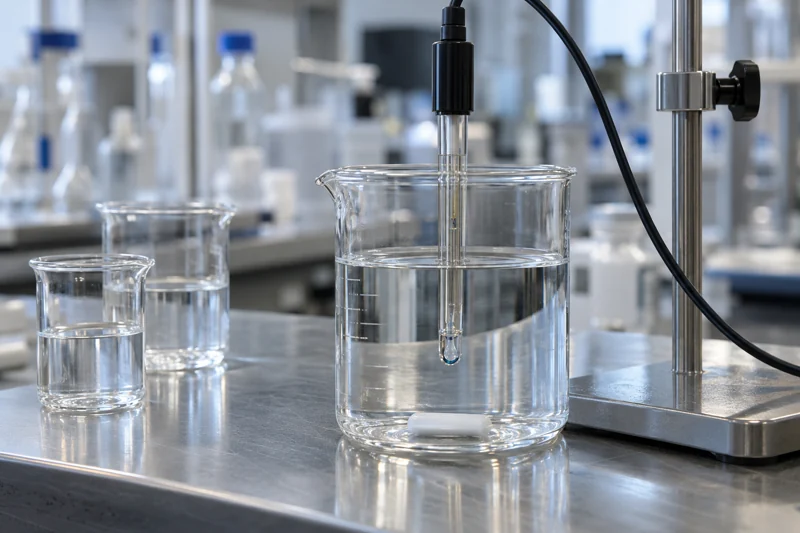
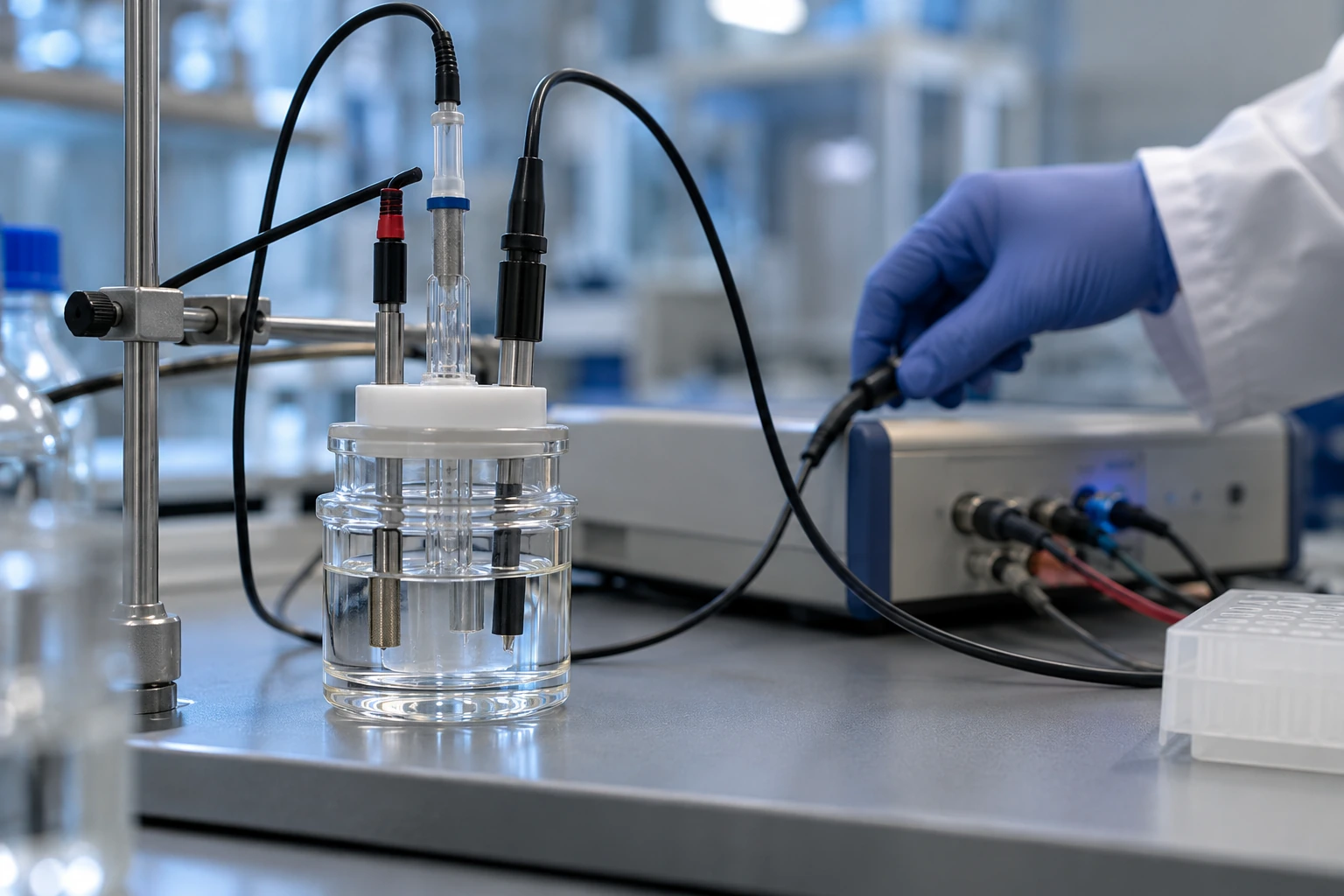
Consider a teaching model with two identical iron coupons under equal volumes of water, one containing dissolved salt. If both coupons have the same finish, temperature, oxygen exposure and wet time, the salt solution can carry ionic current more readily. That predicts a condition favorable to faster electrochemical corrosion, not a numerical rate or guaranteed outcome. A real comparison would need replicate coupons, controlled preparation, a defined exposure period, and a measurement such as mass loss after corrosion products are removed by a specified method. The example is illustrative; it reports no experiment.
Oxygen access can make neighboring spots behave differently
Salt concentration is only one variable. NASA describes oxygen-concentration cells that form when oxygen reaches one part of a wet metal surface more readily than another. The lower-oxygen region can become anodic and corrode beneath a deposit, gasket or tight joint. A salt-containing droplet trapped in a crevice combines an ion-conducting liquid with uneven oxygen access, so damage may concentrate rather than appear as an even orange coating. [2]
The DOE chemistry handbook likewise explains that oxygen supports the cathodic reaction and can increase iron corrosion in water. If oxygen transport to the surface becomes rate-limiting, changing salt content alone may not produce a proportional change in the overall process. [3]
Why the saltiest solution need not be the fastest
Adding salt initially raises ionic strength, but it also changes other properties. In a closed experiment, higher salinity can reduce oxygen solubility; deposits or corrosion products may obstruct transport; and the surface film may change. The net rate reflects the slowest or most restrictive steps under those particular conditions. The DOE handbook emphasizes oxygen transport and surface condition as factors in corrosion, which is why a conductivity change cannot by itself be converted into a rate prediction. [3]
The practical lesson is not that salt eventually protects iron. It is that “saltier” is not a complete experimental description. Metal composition, temperature, acidity, oxygen renewal, wet-dry cycling, geometry and measurement method all matter.
A fair test measures metal loss, not just visible color
Orange color is a useful clue but an imperfect measure. Corrosion products can remain attached, wash away, or form below a coating. A simple mass-loss test therefore requires consistent cleaning and drying, an unexposed control where appropriate, and enough replicate samples to show variability. Dissolved iron measurement answers a different question: it captures material that entered the sampled solution, not necessarily all iron transformed into solid products.
For an everyday demonstration, keep coupon size, sanding, solution volume and exposure time the same; label the salt concentration; and photograph both surfaces at fixed intervals. Such a demonstration can show qualitative differences, but should not be used to infer service life for a bridge, vehicle or appliance.
Coatings and sacrificial metals interrupt the cell
Paint works as a barrier while continuous: it limits contact among metal, water and oxygen. A scratch creates a local opening, so coating quality and edge coverage matter. Galvanizing uses zinc differently. Because zinc is more readily oxidized than iron, an electrically connected zinc layer can corrode preferentially and help protect exposed iron; OpenStax describes this as sacrificial-anode protection. [1]
Neither method removes the need to consider the environment. Salt can persist in seams and under deposits, and a coating defect can concentrate attack. Cleaning deposits, preventing trapped moisture and inspecting damaged coatings address the conditions that allow the electrochemical cell to operate.
Read salt exposure as a coupled chemistry problem
Salt matters because it changes the liquid pathway for charge and, in some alloys, chloride can undermine a passive surface film. Oxygen reduction, water, metal composition and local geometry complete the explanation. For a specific object, the useful question is therefore not simply “How much salt is present?” but “Where is the wet electrolyte, how does oxygen reach it, and what protects the metal there?” That framing connects the visible rust to testable chemistry without pretending that one household observation predicts engineering performance.
Salt can support corrosion by carrying ionic current and, for some passive alloys, chloride can destabilize protective films; oxygen supply and surface conditions determine the actual pattern and rate.
Sources & further reading
Numbered references connect claims to their source. The main text is our original explanation; conceptual examples are identified as imagined.
- OpenStax Chemistry 2e — 17.6 CorrosionOpen textbook · electrochemical corrosion, rust, electrolytes and protection
- NASA Kennedy Space Center — Forms of CorrosionNASA technical guidance · oxygen concentration cells, chloride pitting and corrosion control
- U.S. Department of Energy — DOE Fundamentals Handbook: Chemistry, CorrosionGovernment technical handbook · oxygen transport and iron corrosion
Source review: 6 Nov 2026. Editorial standards.