Water quality involves more than what can be seen
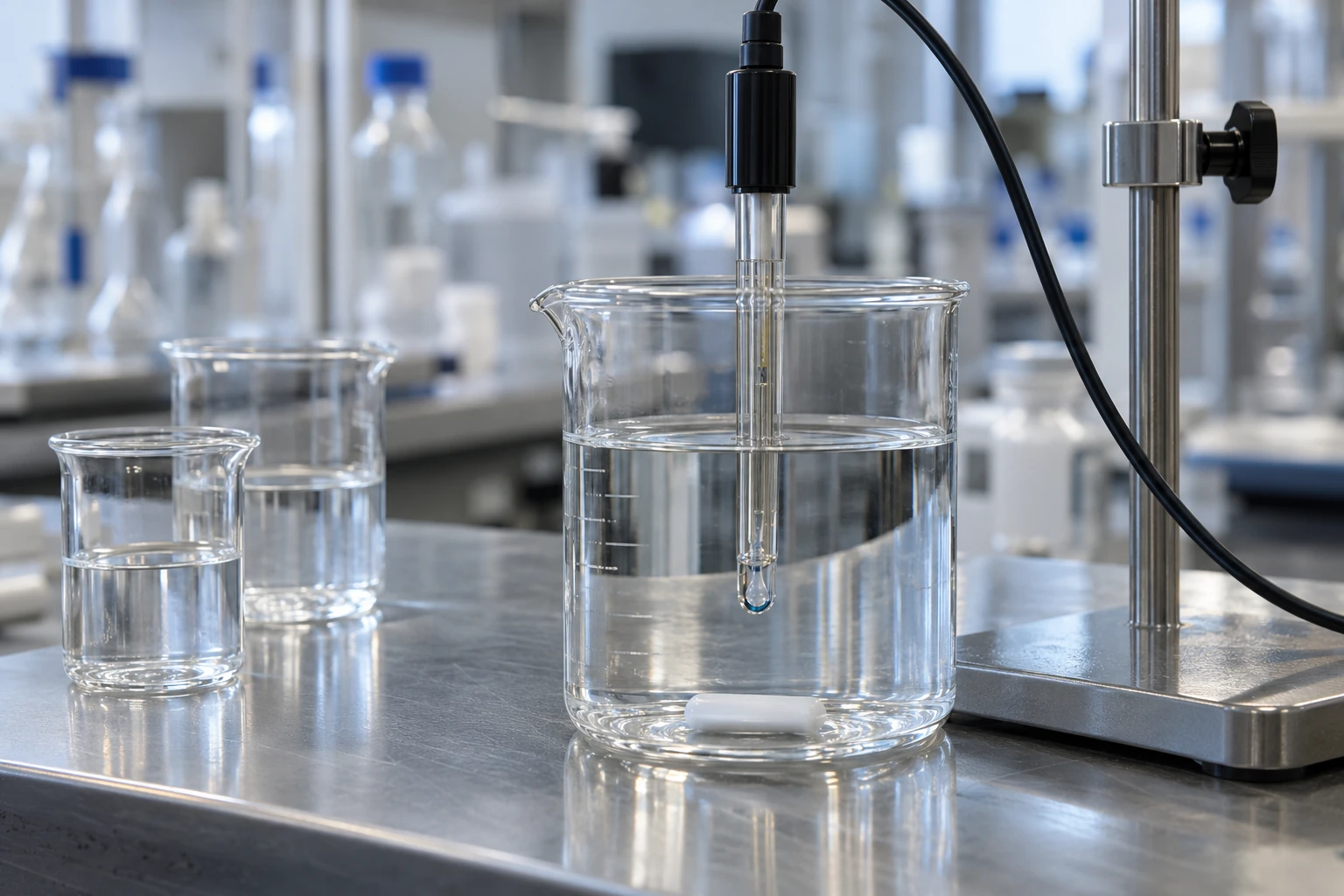
A clear glass of water can contain dissolved substances that are invisible at the concentrations of interest. Treatment therefore begins with a defined problem: which substances need to be controlled, in what incoming water and to what required outcome? Without that definition, a claim that one technology “cleans water” is too broad to assess.
Different processes address particles, dissolved compounds, salts or microorganisms in different ways. A useful system may combine stages because no single mechanism is appropriate for every constituent. EPA's overview of drinking-water technologies describes a range of approaches and their operating considerations. [1] Understanding the mechanism is the first step toward understanding both the cleaner water and the material left behind.
Adsorption moves a substance onto a surface
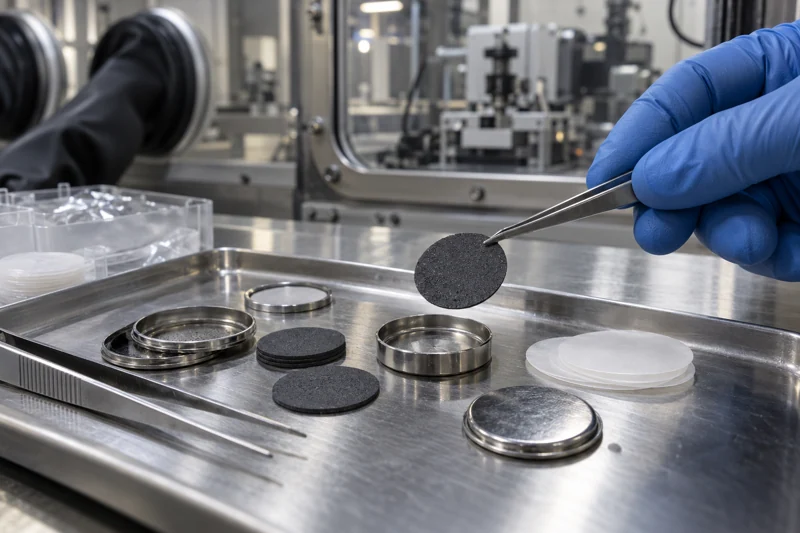
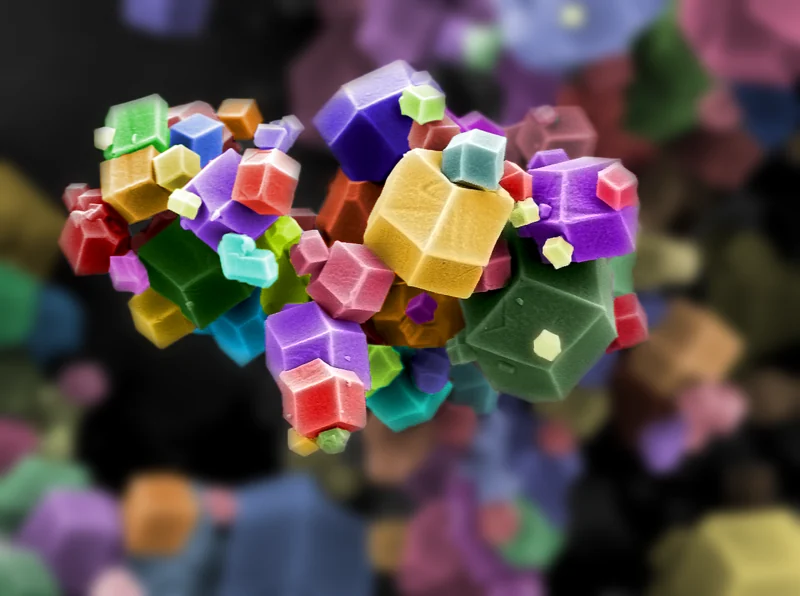
An adsorbent can preferentially retain some molecules at its surface while water passes through. Internal porosity can provide a large area for contact, but not every part of that area is necessarily accessible to every compound under operating conditions. Interactions with the surface and competition from other substances affect the result.
The material also has finite usable capacity. As a bed is used, a target compound may begin to appear at its outlet, a phenomenon often described through breakthrough behaviour. A fresh sample performing well in a short test does not establish how long a full bed will meet a requirement. The relevant questions include contact time, input composition, replacement or regeneration and management of the substances accumulated on the material.
Ion exchange uses charged sites
An ion-exchange material contains charged sites associated with exchangeable counterions. When water contacts it, some dissolved ions can replace others according to the chemistry of the material and the surrounding solution. This is a selective separation mechanism rather than a universal trap for everything dissolved in water.
Competition matters because natural and treated waters contain mixtures of ions. A material's behaviour with one target in a simplified test solution may differ when other dissolved species are abundant. Regeneration, where appropriate, produces another stream that requires management. Describing the resulting water without describing the regenerant or spent medium leaves part of the process out of view. The useful treatment result includes the destination of both the target and the chemicals used to remove it.
A membrane separates streams rather than deleting mass
Membrane processes create streams with different compositions. Depending on the membrane and operating conditions, some substances pass more readily than others. Pressure-driven systems also require energy to move water through the barrier. The membrane's structure, surface interactions and the composition of the feed influence what is retained and how fast water can be processed.
An invented mass-balance example makes the separation visible. Suppose 100 units of a contaminant enter and the product water carries five. Ignoring storage in the equipment and other losses, the remaining 95 units must leave elsewhere, commonly in a residual or concentrate stream. The cleaner product is valuable. The balance shows why concentrate management is part of delivering that value rather than a separate detail that can be omitted.
Transformation asks what products are created
Some treatment processes chemically or biologically change substances rather than only separating them. The desirable outcome depends on which products form, how completely the transformation proceeds and whether the new substances are easier to manage. Loss of the starting compound is useful evidence but does not establish the full outcome.
The 2026 lithium-mediated PFAS study illustrates this distinction through separate measures of PFOA degradation and defluorination. [2] Its specialized laboratory chemistry should not be generalized into a household treatment claim. For any transformation process, a convincing evaluation follows relevant products and residuals, tests realistic mixtures and explains the analytical limits. The right question is not simply whether the original name disappears from a results table, but what chemical system replaces it.
Operating conditions determine a treatment result
A reported removal fraction belongs to a particular test. Initial concentration, flow rate, contact time, pH, temperature and competing substances can all affect its interpretation. A result obtained with abundant fresh treatment medium and a clean synthetic feed may not describe sustained operation on a variable real-world source.
For an educational comparison, imagine two beds that initially remove the same fraction of a compound. One reaches breakthrough after processing ten times as much water as the other. Their first-sample results match, but their practical service differs substantially. The example shows why performance over time belongs alongside a headline percentage. Useful reporting makes it possible to connect the treatment conditions with an operating requirement and a maintenance schedule.
Concentration and total pollutant load are different quantities
Concentration describes an amount per volume; total load also depends on how much water is processed. In an invented example, water containing one microgram per litre of a compound carries 0.1 gram of it through a plant treating 100,000 litres each day. Ten times the flow at the same concentration brings ten times the daily amount.
This simple calculation connects an analytical reading to the burden placed on treatment media and residual handling. It also shows why dilution alone is not destruction: lowering concentration by adding water can leave the total amount unchanged. A meaningful treatment assessment follows both the composition of the streams and their volumes over a relevant operating period.
A treatment chain should be assessed as one system
Combining stages can make sense when each performs a distinct task. A preliminary separation may protect a later unit; a capture stage may reduce the volume requiring a demanding destruction process. Each addition also introduces equipment, resource needs and residuals. The complete arrangement must be evaluated against the service it delivers.
For PFAS wastes, EPA's destruction-and-disposal guidance emphasizes the characteristics of the waste, potential releases and limitations of the available evidence. [3] The guidance should not be read as certifying every emerging technology. The general lesson is applicable more widely: a process is only as complete as its accounting of water, chemicals, captured material and outputs. Moving a problem from one stream to another can be useful, but the destination still matters.
What this means for everyday water claims
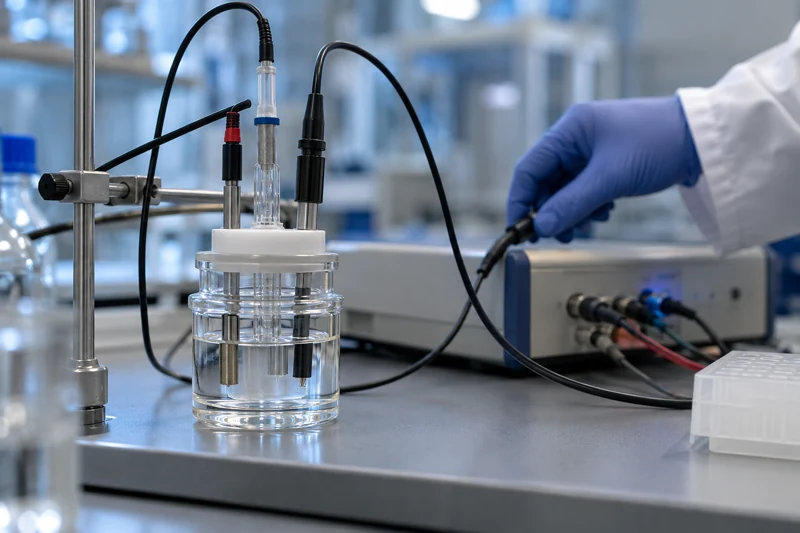
A credible claim identifies the substances tested, the conditions and the length of the test. It should distinguish an improvement in taste or visible appearance from a demonstrated reduction of a named contaminant. A pH reading, total dissolved-solids value or photograph of clear water cannot replace analysis for every substance of concern.
The appropriate decision also depends on the actual source water and the standards that apply where it is supplied. This article explains mechanisms rather than recommending a specific home treatment product. The broader benefit of chemistry is the ability to ask a more precise question: what does the process separate or transform, what evidence establishes the result, and what happens to everything that does not remain in the product water?
Knowing where a contaminant goes helps explain both water-treatment benefits and its remaining waste.
Sources & further reading
Numbered references connect claims to their source. The main text is our original explanation; conceptual examples are identified as imagined.
- US EPA — Overview of Drinking Water Treatment TechnologiesGovernment · treatment mechanisms
- Sarkar et al. — Lithium metal-mediated electrochemical reduction of PFASResearch paper · Nature Chemistry · 20 January 2026
- US EPA — Interim guidance on PFAS destruction and disposalGovernment · 2026 guidance and research limitations
Source review: 30 Oct 2026. Editorial standards.