A repeated chemical unit can produce many different materials
A polymer contains large molecules built from many connected units. The identity of those units matters, but so do their arrangement, the length of the chains and the ways chains interact. This explains why naming a polymer family does not completely specify the behaviour of an object made from it.
Polymers are not confined to synthetic packaging. Cellulose, proteins and many other biological materials are macromolecular systems too. Their properties connect local chemical bonds with structures extending across many length scales. The American Chemical Society's polymer teaching resources place this relationship between molecular structure and material behaviour at the centre of the subject. [1] The useful question is how the particular structure enables the task a material needs to perform.
Chain architecture changes how molecules fit together
A chain can be relatively linear, contain branches or form part of a connected network. Side groups and the sequence of repeating units influence how neighbouring chains approach one another. Even when two materials share a broad chemical name, differences in architecture can change packing, mobility and mechanical response.
Imagine comparing two collections of long flexible strands. One can align closely over extended regions; the other has branches that interrupt that alignment. This is a limited structural analogy, not a complete theory of polymer properties. Real materials also depend on chemical interactions, molecular-weight distribution and processing history. The point is that the repeat unit alone leaves important information out of the description, just as identifying the material in a fibre does not specify how the fibre was arranged.
Entanglements and cross-links constrain movement differently
Long chains can become physically entangled, making their collective motion slower than that of short freely moving molecules. Cross-links add chemical connections between chains. These two kinds of constraint are different: an entanglement does not create the same permanent molecular connection as a covalent cross-link.
The distinction helps explain familiar categories. Many thermoplastics can be softened and reshaped under suitable conditions. Thermosets contain networks that do not simply melt into independent chains when heated; excessive heating can instead lead to degradation. Elastomeric behaviour involves the ability to deform and recover within an appropriate network and temperature range. UNSW's materials tutorial explains these structural categories. [2] Actual products can contain several components, so the category is a starting point for understanding their behaviour.
Order and disorder can coexist inside one object
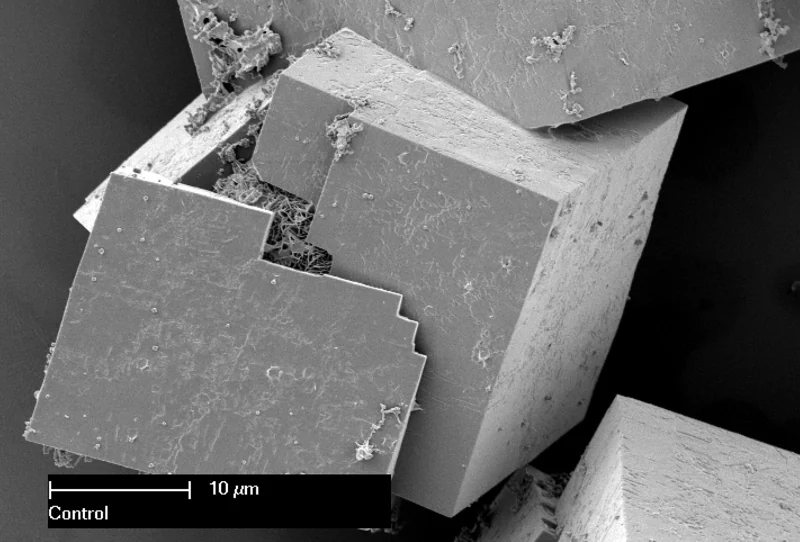
Some polymer materials contain regions where chain segments pack in relatively ordered structures alongside less ordered regions. The proportion, size and arrangement of these regions can influence stiffness, optical appearance and transport. A material's processing history therefore matters as well as its chemical formula.
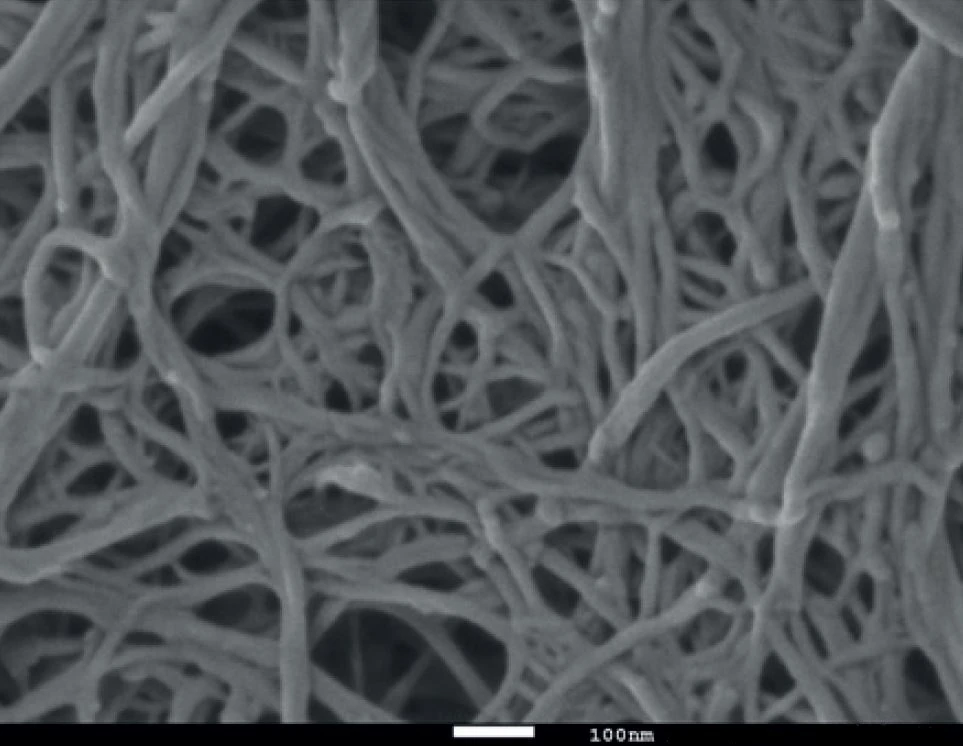
Cooling, stretching and other manufacturing steps can change how chains organize. A fibre pulled in one direction can develop different properties along and across that direction. The resulting object need not behave identically in every orientation. This is a useful reminder that a bulk property belongs to a structured material under specified conditions. Testing one small sample cannot automatically establish the performance of every object made from the same polymer family.
Temperature changes the motion available to chains
Polymer response depends on how readily segments of the chains can move on the timescale of a test. Near a glass transition, a relatively glassy response can give way to more segmental mobility and a softer response. Melting of crystalline regions is a different transition. The two concepts should not be treated as interchangeable labels for the moment a plastic becomes “hot.”
Time matters alongside temperature. A material that seems rigid under a quick load may gradually deform under a sustained one. This behaviour helps explain why a short laboratory strength test and years of service can pose different questions. Designers need properties measured at relevant temperatures, loading rates and durations, rather than a single value detached from how the object will be used.
A product is usually a formulation and a structure
Pigments, fillers, plasticizers, stabilizers and reinforcing components can change the performance of a polymer product. Layers and coatings can add functions that the main polymer would not provide alone. A transparent film that limits moisture transfer and a rigid structural component are therefore engineered systems, not just different shapes of an identical molecule.
Consider an invented packaging comparison. A very thin single-layer material has excellent recyclability in principle but does not protect the product long enough. A layered alternative provides the required barrier but is harder to separate after use. The useful comparison includes the amount of material, the service delivered and the available waste route. Optimizing one molecular property does not by itself settle the environmental choice.
Reshaping, chain cleavage and fragmentation are different changes
Softening a thermoplastic can permit a change in shape without intentionally breaking every polymer chain into its building blocks. Chemical recycling may instead involve reactions that cleave bonds and create different molecules. Environmental fragmentation can make an object smaller while leaving much of its polymer chemistry present.
These processes should not be conflated. A material disappearing from view has not necessarily become harmless small molecules, and repeated heating can change properties rather than providing unlimited identical reuse. Identifying the actual chemical change helps connect a claim to its evidence. It also explains why measuring particle size, molecular composition and useful material performance can lead to different conclusions about what happened to a polymer after use.
Bio-based, biodegradable and compostable describe different claims
“Bio-based” concerns the origin of some or all of the feedstock. “Biodegradable” concerns breakdown under specified biological and environmental conditions. “Compostable” adds requirements associated with a particular composting setting. None of these words alone establishes what will happen to an object dropped into an arbitrary outdoor environment.
EPA's guidance distinguishes these labels and the conditions required for appropriate processing. [3] A commercially compostable item may require a facility that is unavailable locally. A bio-based material can remain persistent, and a material that can break down in one setting may behave differently elsewhere. The scientifically useful description names the conditions, timescale and resulting products instead of treating the label as a general promise of harmless disappearance.
Recycling depends on the whole material pathway
Mechanical reprocessing changes the physical form of a material while aiming to preserve useful polymer properties. Chemical routes can transform it into other substances or feedstocks. Both require suitable inputs and outputs, and neither description guarantees that the resulting material will meet a useful specification.
Collection and sorting determine what reaches the process. Additives, mixed layers and contamination can affect the quality of the recovered output. A meaningful assessment therefore follows the product beyond the point where a symbol or resin name appears on its surface. Polymer chemistry helps explain what is possible; local infrastructure and process performance determine what actually happens. The most useful materials connect the required service with a credible route through manufacture, use and the next stage of their lives.
Chain structure helps explain why one polymer stretches, another flows and another stays rigid.
Sources & further reading
Numbered references connect claims to their source. The main text is our original explanation; conceptual examples are identified as imagined.
- American Chemical Society — The World of Polymers and PlasticsScientific society · teaching reference
- UNSW School of Materials Science and Engineering — Polymer typesUniversity teaching resource · thermoplastics, thermosets and elastomers
- US EPA — Plastic recycling and composting questionsGovernment · material labels and waste-management conditions
Source review: 30 Oct 2026. Editorial standards.